2026
Johannes Jordan; Oliver Antons; Julia Arlinghaus
From Data Quality Deficiencies to Production Inefficiency: Data Quality as a Bottleneck for AI-Based PPC Proceedings Article
In: Pezzotta, Giuditta; Gaiardelli, Paolo; Cimini, Chiara; Sala, Roberto; Romero, David; Baalsrud-Hauge, Jannicke (Hrsg.): Advances in Production Management Systems: Shaping the Future of Industry Through Sustainable, Data-Driven, and Human-Centric Production Systems, S. 269–284, Springer Nature Switzerland, Cham, 2026, ISBN: 978-3-032-38606-9.
Abstract | Links | BibTeX | Schlagwörter: Articifial Intelligence, Data, Data analytics, Data Quality
@inproceedings{10.1007/978-3-032-38606-9_19,

title = {From Data Quality Deficiencies to Production Inefficiency: Data Quality as a Bottleneck for AI-Based PPC},

author = {Johannes Jordan and Oliver Antons and Julia Arlinghaus},

editor = {Giuditta Pezzotta and Paolo Gaiardelli and Chiara Cimini and Roberto Sala and David Romero and Jannicke Baalsrud-Hauge},

url = {https://link.springer.com/chapter/10.1007/978-3-032-38606-9_19},

doi = {10.1007/978-3-032-38606-9_19},

isbn = {978-3-032-38606-9},

year  = {2026},

date = {2026-09-18},

urldate = {2026-09-18},

booktitle = {Advances in Production Management Systems: Shaping the Future of Industry Through Sustainable, Data-Driven, and Human-Centric Production Systems},

pages = {269\textendash284},

publisher = {Springer Nature Switzerland},

address = {Cham},

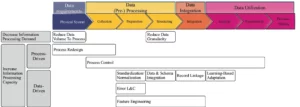
abstract = {Data-driven decision support systems utilizing Artificial Intelligence (AI) are increasingly applied in Production Planning and Control (PPC) to improve operational performance. However, AI-based methods are found to be more sensitive to data quality deficiencies than conventional approaches, limiting their practical applicability. While previous research primarily highlights the requirement for high data quality, less attention has been paid to their impact on specific PPC tasks and the effectiveness of improvement strategies. This paper develops a conceptual linkage between data quality deficiencies, uncertainty in PPC tasks, and contingency theory, describing how improvement strategies can be aligned to support both conventional and AI-based smart PPC. A structured literature review is conducted to identify data quality deficiencies, their causes, and associated improvement strategies in PPC. The results indicate that data quality deficiencies increase uncertainty and demonstrate that AI-based methods are more sensitive to these deficiencies than conventional approaches. Furthermore, identified improvement strategies are structured according to their ability to either reduce the need for information processing or increase information processing capacity. The paper contributes to theory by providing guidance for selecting appropriate improvement strategies in smart manufacturing.},

keywords = {Articifial Intelligence, Data, Data analytics, Data Quality},

pubstate = {published},

tppubtype = {inproceedings}

}
Data-driven decision support systems utilizing Artificial Intelligence (AI) are increasingly applied in Production Planning and Control (PPC) to improve operational performance. However, AI-based methods are found to be more sensitive to data quality deficiencies than conventional approaches, limiting their practical applicability. While previous research primarily highlights the requirement for high data quality, less attention has been paid to their impact on specific PPC tasks and the effectiveness of improvement strategies. This paper develops a conceptual linkage between data quality deficiencies, uncertainty in PPC tasks, and contingency theory, describing how improvement strategies can be aligned to support both conventional and AI-based smart PPC. A structured literature review is conducted to identify data quality deficiencies, their causes, and associated improvement strategies in PPC. The results indicate that data quality deficiencies increase uncertainty and demonstrate that AI-based methods are more sensitive to these deficiencies than conventional approaches. Furthermore, identified improvement strategies are structured according to their ability to either reduce the need for information processing or increase information processing capacity. The paper contributes to theory by providing guidance for selecting appropriate improvement strategies in smart manufacturing.